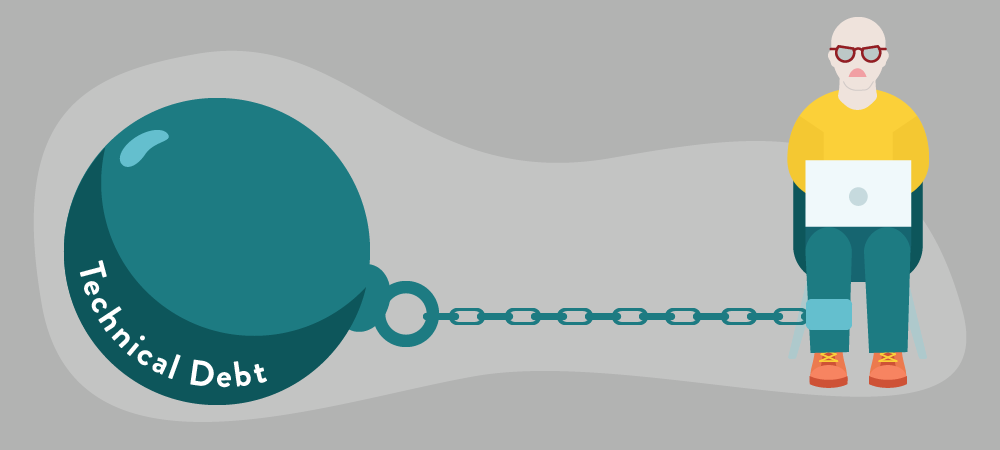
Technical debt and operational debt are related, but they live in different layers of a system. ????? The distinction matters because they fail differently, accumulate differently, and require different remediation strategies.
Technical debt
What it is:
Compromises in code, architecture, or data models that make systems harder to change or reason about over time.
Typical causes
-
Rushed implementations (“we’ll refactor later”)
-
Overloaded abstractions
-
Poorly designed schemas or APIs
-
Missing tests or brittle test suites
How it shows up
-
Slower development velocity
-
Increased defect rate during changes
-
Fragile deployments
-
High cognitive load for engineers reading or modifying code
Failure mode
-
Often visible and deterministic: compile errors, failing tests, obvious bugs, regressions.
Accounting metaphor
-
Interest is paid in engineering time and risk during change.
Operational debt
What it is:
Compromises in how systems are run, observed, and recovered—process, tooling, and operational knowledge.
Typical causes
-
Noisy or missing alerts
-
Undocumented runbooks
-
Manual operational steps
-
Inconsistent environments
-
Lack of ownership clarity
-
Tribal knowledge replacing shared understanding
How it shows up
-
Slow or chaotic incident response
-
Repeated incidents with different root causes
-
On-call fatigue
-
Overreliance on specific individuals
-
“We don’t know what’s broken, but it feels bad”
Failure mode
-
Often latent and nonlinear: systems “work” until stress reveals brittleness.
-
High blast radius during incidents.
Accounting metaphor
-
Interest is paid in MTTR, customer trust, and human burnout.
Key differences at a glance
DimensionTechnical DebtOperational Debt
Primary surfaceCode & architectureRuntime & processes
Detected byDevelopersOn-call engineers, SREs
Cost paidSlower change, bugsLonger outages, chaos
VisibilityHigh during developmentHigh during incidents
Typical ownerEngineering teamsPlatform/SRE/Operations
Risk profileGradual degradationSudden failure amplification
Where they intersect (and compound)
-
Technical debt creates operational debt when systems are hard to observe or debug.
-
Operational debt hides technical debt by normalizing workarounds.
-
The worst incidents usually occur when both are high:
-
Complex code + poor observability = prolonged outages
-
Brittle architecture + manual recovery = cascading failures
-
Managing them differently
Technical debt strategies
-
Explicit refactoring budgets
-
Architectural decision records (ADRs)
-
Test coverage as a first-class metric
-
“Boy scout rule” improvements
Operational debt strategies
-
Treat incidents as signals, not accidents
-
Invest in observability SNR (not just more metrics)
-
Runbook ownership and drills
-
Eliminate manual steps before scaling
-
Measure operational load, not just uptime
A useful heuristic
-
If the pain appears when you change the system ? technical debt
-
If the pain appears when the system changes itself (under load, failure, time) ? operational debt
If you want, I can map this to incident postmortems, SLOs, or org structure—each reveals a different failure pattern.