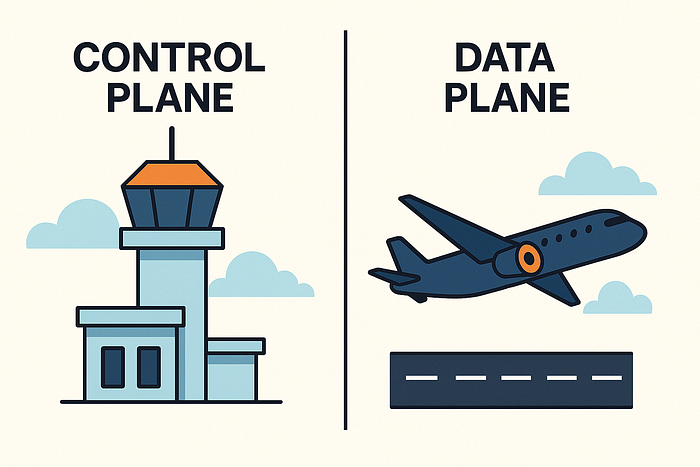
Control-plane vs Data-plane outages are easy to conflate but behave very differently in impact, onlinebacarrat detection, and recovery. Treating them as the same class of incident is a common root cause of prolonged outages and misleading dashboards.
1. What actually breaks
Control plane outage
The system cannot decide, configure, or coordinate, but may still execute previously decided actions.
Examples
-
Scheduler / orchestrator unavailable
-
Config service, feature flags, or policy engine down
-
Leader election or consensus failure (etcd, ZK)
-
Auth / quota / admission checks failing
-
Deployment or scaling APIs broken
Key property
The system can still “do”, but cannot “change its mind”.
Data plane outage
The system cannot execute requests, even if decisions are valid.
Examples
-
Request handlers crash or deadlock
-
Saturated threads, queues, or sockets
-
Dependency timeouts (DB, cache, RPC)
-
Packet loss, load balancer failure
-
Hot shard / hotspot exhaustion
Key property
The system knows what to do, but can’t do it.
2. User-visible symptoms
DimensionControl PlaneData Plane
Existing trafficOften continuesFails or degrades
New changesImpossibleSometimes possible
Deploys / scaleBrokenMight work
Config updatesNot appliedApplied but ineffective
LatencyUsually normalElevated / timeouts
Error ratesOften low initiallyHigh
Recovery riskDelayed, stickyImmediate but noisy
Dangerous case:
A green dashboard during a control-plane outage ? false confidence until the first change or failover is needed.
3. Failure patterns to recognize quickly
Control-plane smells
-
“We can’t roll back”
-
“Scaling didn’t help”
-
“Feature flag toggle does nothing”
-
Stale config versions everywhere
-
Failover didn’t happen
Data-plane smells
-
p99 latency spikes
-
Thread pool / queue saturation
-
Elevated retries and backpressure
-
Partial availability (some shards OK)
-
Autoscaling oscillations
4. Why recovery differs
Control plane recovery
-
Requires state repair, not traffic shaping
-
Often needs quorum restoration
-
Rollbacks may be blocked
-
Risk of mass reconciliation storms when it comes back
Anti-pattern: restarting data-plane instances hoping it fixes control-plane state
Data plane recovery
-
Load shedding, scaling, or dependency repair
-
Backpressure and circuit breaking help
-
Often self-healing if traffic drops
Anti-pattern: changing configs repeatedly during saturation (makes it worse)
5. Design implications (often missed)
Observability
-
Separate SLOs:
-
Decision freshness (control plane)
-
Execution success (data plane)
-
-
Alert on:
-
Config age / drift
-
Failed control actions (deploy, scale, flag flip)
-
Architecture
-
Control plane should fail closed or fail frozen explicitly
-
Data plane should degrade independently
-
Cache control decisions in data plane with explicit TTLs
-
Avoid tight coupling: control-plane RPCs on request path
6. Incident management rule of thumb
If traffic is failing ? think data plane first.
If changes don’t work ? suspect control plane immediately.
Ask early in every incident:
-
Can we still change things?
-
Are decisions propagating?
-
Is execution failing despite valid decisions?
If you want, I can:
-
Map this to Kubernetes, service meshes, or betting/transaction systems
-
Show dashboard patterns that distinguish the two
-
Walk through a real incident timeline where they were confused
Just tell me the context.